
Maintenance
Launch day is a milestone, not a finish line.
A website is not a once-off project — it is a living business asset. A website left completely untouched after going live doesn’t stay perfectly still: it slowly degrades, content goes stale, and small broken details accumulate unnoticed.
Beginner Explanation
Updates — to the underlying platform, framework, plugins, or libraries a website depends on — should happen on a regular, deliberate schedule rather than being neglected until something breaks or a security issue forces the issue, directly extending the software-update discipline from Chapter 15. Backups, also from Chapter 15, need to continue running automatically and reliably long after launch, periodically tested to confirm they can actually be restored successfully.
Analytics tools track real visitor behavior over time — which pages get traffic, where visitors drop off, which calls to action actually convert. Without ongoing analytics, a business is essentially making decisions about its website blind. SEO improvements are never a one-time task completed at launch and forgotten — search algorithms evolve continuously and competitors actively publish new content, meaning sustained SEO performance (Chapter 12) genuinely requires sustained, ongoing effort.
Content updates keep a website relevant, accurate, and worth returning to — refreshing outdated information, adding new services as a business genuinely grows, and publishing new blog content regularly (Chapter 7). Security checks and speed checks, extending Chapters 15 and 13, involve periodically re-testing a site rather than assuming a one-time launch check is enough, since accumulated content, features, and third-party scripts can gradually and invisibly degrade a site if nobody is actively watching. This is also, notably, where an ongoing client relationship and recurring revenue naturally live for a web development business — maintenance isn’t just a technical necessity for a client’s website; it’s very often the foundation of a sustainable, long-term web development practice.
Real Business Examples
A monthly content refresh
A cleaning company adds one new blog post a month about seasonal cleaning tips — small, consistent effort that keeps giving Google fresh material to index long after launch.
Analytics turning guesswork into evidence
A restaurant owner discovers, via analytics, that most visitors never scroll past the menu section — prompting a redesign that moves the "Book a Table" button higher up the page.
A quarterly security and speed check-in
Every three months, a developer re-runs PageSpeed Insights and a dependency audit on a client’s site, catching a slowly accumulating slowdown before a customer ever notices it.
Visual Diagram
The maintenance cycle
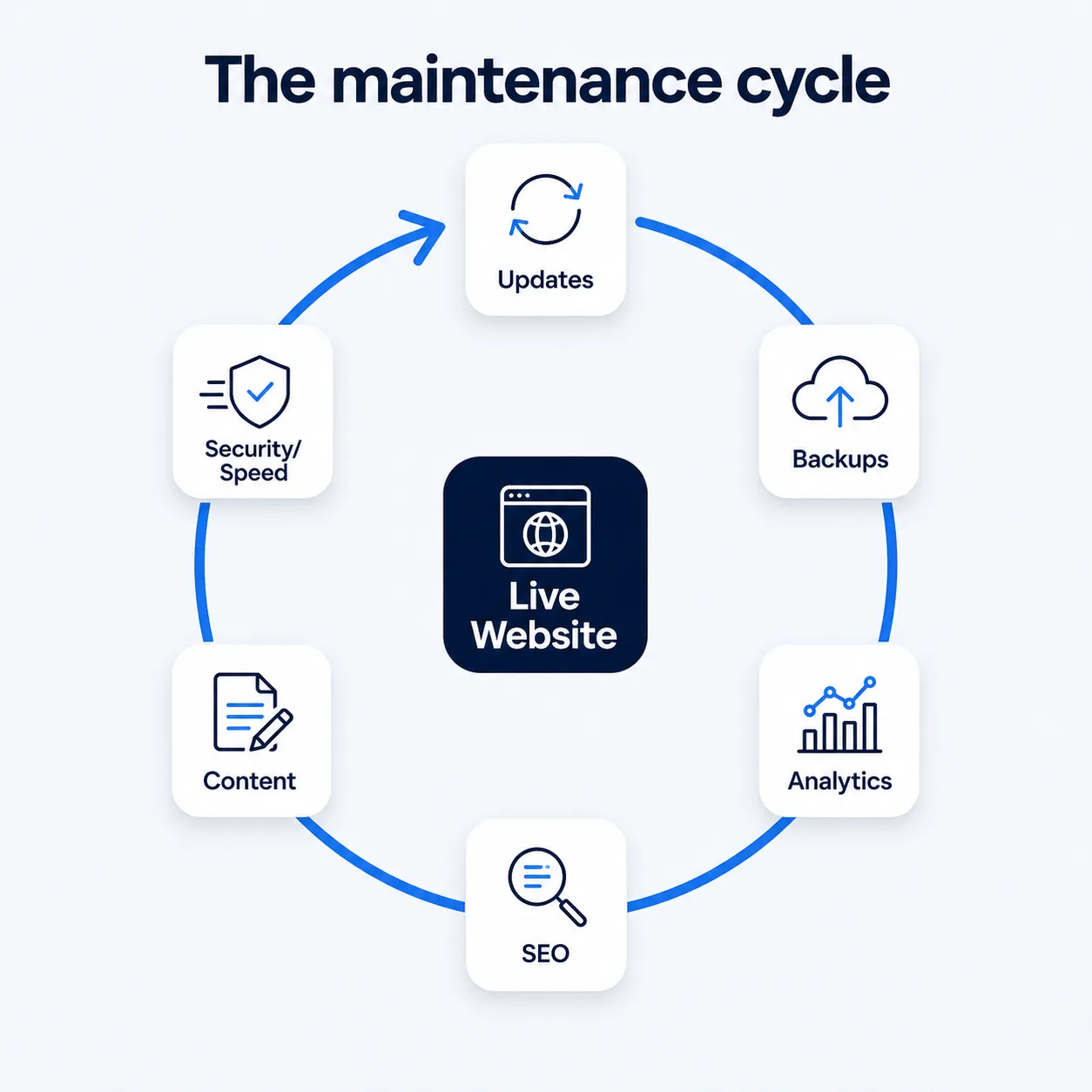
- Updates — platform, framework, and library versions kept current
- Backups — running automatically, tested periodically
- Analytics — reviewed regularly to see what’s actually working
- SEO — ongoing content and optimisation, not a one-time pass
- Content — refreshed and expanded as the business grows
- Security & speed checks — re-tested periodically, not just at launch
Common Mistakes
- Treating a website like a printed brochure — designed once, launched once, then never revisited.
- Letting backups run automatically without ever testing that they can actually be restored.
- Making changes to a live site based on guesswork instead of what analytics actually show.
- Publishing content once at launch and assuming that alone will sustain long-term SEO performance.
Tools to Use
Google Analytics / Microsoft Clarity
Track real visitor behavior over time to guide evidence-based improvements.
Uptime monitors
Alert a business the moment a live site goes down unexpectedly.
Dependency update tools
Flag outdated framework and library versions needing attention.
A recurring maintenance checklist
The same discipline as Chapter 16’s launch checklist, run monthly instead of once.
Key Takeaways
- A website continues to need attention after launch — updates, backups, analytics, and content all require ongoing care.
- Analytics turn website decisions from guesswork into genuine, evidence-based improvement.
- SEO, security, and performance are ongoing disciplines, not one-time tasks completed before launch.
- Treating a website as a living business asset — not a one-off project — is what separates lasting results from a site that quietly decays after launch.
Practical Exercises
- Create a simple monthly maintenance checklist for a live website, covering at least one action from each area in this chapter: updates, backups, analytics review, content, security, and speed.
Want "Maintenance" done for you, not just explained?
We build fast, mobile-first websites for South African local businesses — putting everything in this chapter into practice, professionally.